electromagnetic spectrum
electromagnetic spectrum
all electromagnetic waves travel at the same speed in a vacuum (3.0 × 10⁸ m/s), approximately the same in air. ordered by frequency (lowest to highest): radio waves, microwaves, infrared, visible light, ultraviolet, X-rays, gamma rays.
radio waves
lowest frequency, longest wavelength. used for radio and television transmissions, astronomy, and radio frequency identification (RFID). can penetrate most materials and travel long distances. RFID tags identify objects and animals. Bluetooth uses radio waves for short-range wireless communication; radio waves pass through walls but signal is weakened.
microwaves
higher frequency than radio waves. used for satellite television, mobile phones (cell phones), microwave ovens, and telecommunications. can penetrate some walls; only need short aerials for transmission and reception. satellite phones use low orbit and geosynchronous satellites. mobile phones and wireless internet use microwaves because they penetrate walls and require short aerials.
infrared
higher frequency than microwaves. used for electric grills, short range communications (remote controllers for televisions and intruder alarms), thermal imaging, and optical fibres. absorbed by surfaces causing heating. causes skin burns from prolonged exposure to strong infrared sources. optical fibres use infrared light to carry signals through glass fibres for cable television and high-speed broadband.
visible light
higher frequency than infrared. narrow band of electromagnetic spectrum. used for vision, photography, and illumination. the only radiation humans can see directly. optical fibres use visible light to carry signals through glass fibres.
ultraviolet
higher frequency than visible light. used for security marking (detecting fake banknotes), detecting fake documents, and sterilising water. causes damage to surface cells and eyes, leading to skin cancer and eye conditions with excessive exposure. protection needed through sunscreen and protective eyewear.
X-rays
higher frequency than ultraviolet. used for medical imaging (X-ray machines), security scanning (airport security), and industrial inspection. can penetrate soft tissues but are absorbed by bones and metals. excessive exposure can cause skin burns and increase cancer risk.
gamma rays
highest frequency, shortest wavelength. used for sterilising medical equipment, food preservation, and cancer treatment (radiotherapy). can penetrate most materials and are highly ionising. excessive exposure can cause severe burns and increase cancer risk. requires maximum shielding, with thick lead walls
speed of electromagnetic waves
all electromagnetic waves travel at the same speed in a vacuum (3.0 × 10⁸ m/s), approximately the same in air. their speed is constant regardless of frequency or wavelength, by the equation v = fλ.
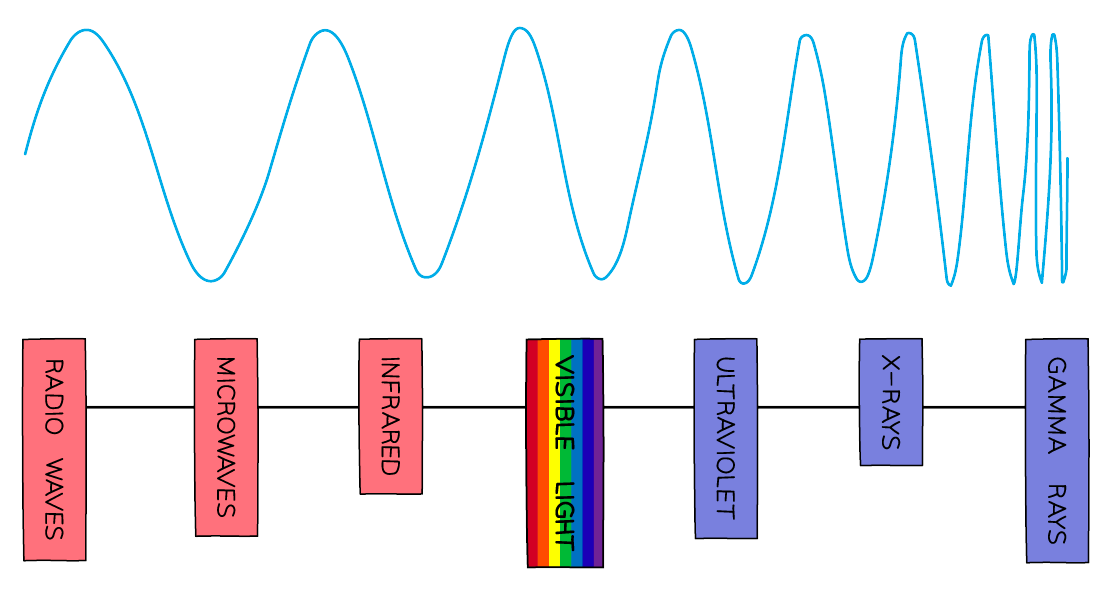
harmful effects of electromagnetic radiation
- microwaves: internal heating of body cells at high exposure levels
- infrared: skin burns from prolonged exposure to strong infrared sources
- ultraviolet: skin burns and increased risk of skin cancer
- X-rays and gamma rays: ionising radiation that can damage living cells, leading to burns and increased cancer risk
satellite communications
communication with artificial satellites uses mainly microwaves. low orbit satellites used by some satellite phones for personal communication. geosynchronous satellites used for direct broadcast satellite television, remaining above same location on Earth.
digital vs analogue signals
digital signals use discrete values (on/off, 1/0) while analogue signals vary continuously. digital signals offer advantages: higher rate of data transmission, increased range due to accurate signal regeneration between repeaters, better quality reception with minimal noise.

sound transmission
sound can be transmitted as digital or analogue signal. digital transmission offers better quality and longer range than analogue transmission due to signal regeneration capabilities.