6.1
earth, the moon, and the solar system
6.1.1 earth, moon, and planetary motion
axis and rotation
the axis is an imaginary line around which the earth rotates.
- runs from antarctica to the arctic ocean
- earth completes one rotation in approximately 24 hours
- day and night are caused by rotation about the axis
equator and hemispheres
the equator is an imaginary line that divides the earth into two halves.
- above the equator is the northern hemisphere
- below the equator is the southern hemisphere
seasons
- the earth is tilted at an angle of 23.5°
- sunlight does not strike both hemispheres at the same angle
- the hemisphere tilted towards the sun experiences summer
- summer has longer days and more direct sunlight
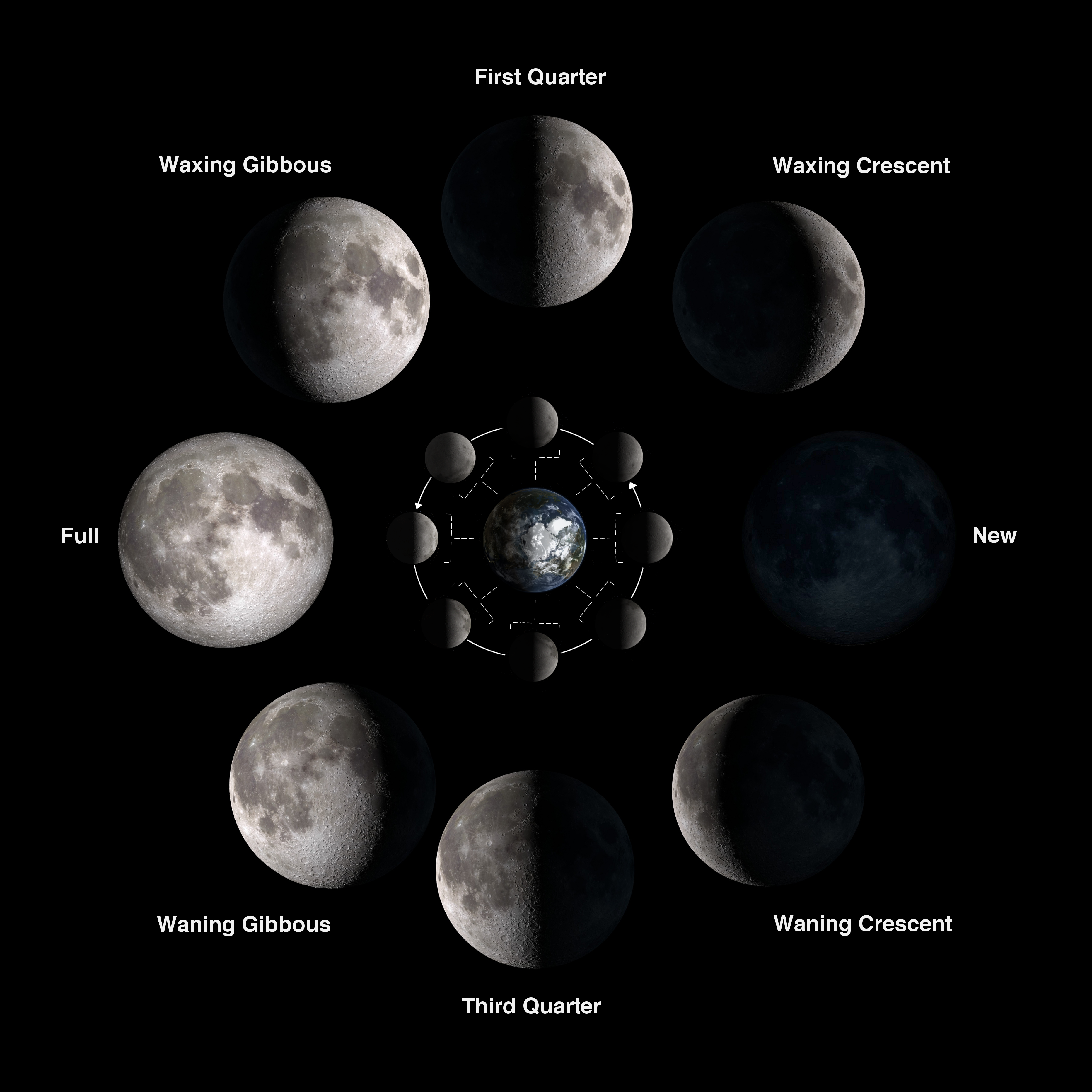
orbit of the moon
- the moon orbits the earth approximately once every month
- only the sunlit side of the moon reflects light
- different amounts of the lit side are visible from earth
- this causes the phases of the moon
orbital speed of planets
orbital speed is calculated using distance travelled divided by time.
speed = distance / time
for a circular orbit:
distance = 2πr
speed = 2πr / orbital period
6.1.2 the solar system
components of the solar system
- the sun is a star
- there are eight planets: mercury, venus, earth, mars, jupiter, saturn, uranus, neptune
- moons orbit planets
- minor planets include pluto and similar bodies
- asteroids are mainly found between mars and jupiter
- comets are made of dust and gas
planetary orbits
- planets have elliptical orbits
- the sun is not at the centre of the orbit
- planets orbit a point between themselves and the sun
formation of planets
- the first four planets are small and rocky
- the outer four planets are large and gaseous
formation process:
- hydrogen and other elements were spread throughout space
- gravity pulled particles together to form the sun
- remaining gas and dust formed a rotating accretion disc
- gravity pulled dust together to form rocks and planets
- heat from the sun pushed lighter gases outward
- this formed the gaseous outer planets
gravitational field strength
- gravitational field strength depends on mass
- it decreases with increasing distance from the object
- the sun has the strongest gravitational field in the solar system
- orbital speeds of planets decrease with distance from the sun
changing speed of a comet
- comets have highly elliptical orbits
- comets move faster when closer to the sun
- gravitational potential energy decreases as distance decreases
- kinetic energy increases as speed increases
- total energy remains constant
total energy = gravitational potential energy + kinetic energy